Field Intelligence · 005
5 Red Flags in a Man—or Is It Just a Misalignment?
Five relationship red flags to take seriously, plus a clear way to distinguish danger, incompatibility, and ordinary problems that can be repaired.
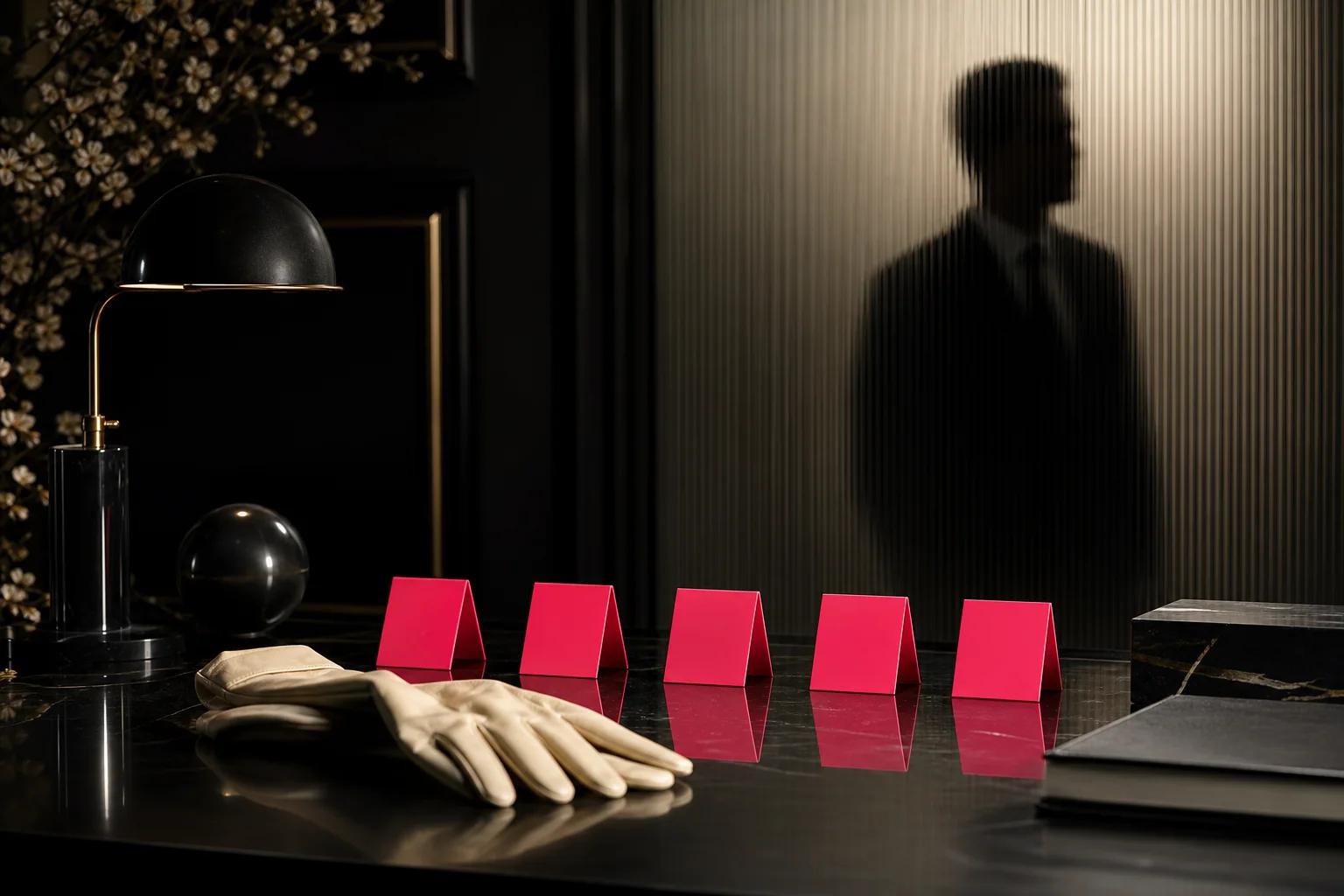
Not every uncomfortable moment is a red flag. Some are incompatibilities. Others are ordinary relationship problems that two accountable people can repair.
The distinction matters: calling everything toxic makes discernment weaker, while calling danger a communication issue can keep you in harm’s way.
Women are currently punished for both errors. Name a pattern too early and you are “dramatic.” Name it too late and you are “naive.” This file is not a permission slip to pathologise a man for having a bad week. It is a field guide for when the week is a climate.
Read it with your body in the room. If a section makes your stomach drop because it is familiar, do not skip to the more flattering interpretation. Flattering interpretations are how red flags get rebranded as chemistry. You are allowed to hope he is the exception. You are not required to bet your nervous system on it without evidence that would convince a sober friend.
01 / Field note
Red flag 1: control disguised as care
Concern becomes control when he tries to decide what you wear, who you see, where you go, how you spend, or how quickly you respond—and punishes resistance. Jealousy is not proof of devotion. It is often a bid for jurisdiction over your life.
Early control is frequently charming: he wants to pick you up, he hates that other men look, he “worries” when you go out with friends. Listen for the penalty. If warmth arrives only when you comply, you are not being loved. You are being trained.
A partner can prefer your company without isolating you. Isolation is a strategy. Preference is a feeling. Know which one you are living inside.
02 / Field note
Red flag 2: contempt and humiliation
Watch how he handles your dignity when annoyed. Mockery, name-calling, public embarrassment, cruel “jokes,” and disgust are not communication quirks. Repeated contempt corrodes emotional safety and is one of the clearest predictors that a relationship will rot from the inside.
Pay attention to the audience. A man who humiliates you in front of his friends is showing them the hierarchy. A man who humiliates you in private is showing you the hierarchy. Neither is a misunderstanding about humour.
03 / Field note
Red flag 3: reality is always rewritten
A person who consistently denies documented events, reverses blame, or makes you doubt your perception may be using manipulative behaviour. Do not rush to diagnose them; pay attention to the effect and the pattern. If you leave every argument less sure of what happened than when you entered it, that is the data.
Keep a private record if you need to—dates, messages, what was said. Not to win a court case in your group chat. To protect your own memory from being edited by someone who benefits when you distrust it.
04 / Field note
Red flag 4: boundaries trigger punishment
A healthy person may feel disappointed by a boundary. They do not retaliate with silence, threats, pressure, rage, or withdrawal of affection until you surrender it. Disappointment is human. Punishment is a tactic.
Test this with something small and true: you cannot stay over, you need a night with friends, you are not ready for a label or you are ready and he is not. Watch the next forty-eight hours. The response is the relationship.
05 / Field note
Red flag 5: apologies never become change
An apology without altered behaviour is often a reset button for the same cycle. Look for ownership, repair, and consistent follow-through—not eloquence during the crisis. A man who is gifted at sorry and ungifted at Tuesday is not growing. He is managing you.
Change has a calendar. If the same rupture repeats after three sincere speeches, believe the rupture. Your job is not to become a more inspired audience.
06 / Field note
Red flag, misalignment, or obstacle?
A red flag points to danger, coercion, manipulation, or a serious absence of accountability. A misalignment is a meaningful incompatibility—perhaps children, monogamy, lifestyle, or values—even when both people are decent. An obstacle is a problem that willing, compatible partners can address together.
Misalignment still ends relationships. It just does not require you to call him a monster. You can leave a kind man who does not want what you want. That is adulthood, not cruelty.
- Does the issue threaten safety, freedom, dignity, or reality? Treat it as a red flag.
- Would solving it require one person to betray a core value? It is likely a misalignment.
- Can both people name the issue, share responsibility, and follow a plan? It may be a solvable obstacle.
- Are you the only one doing the naming, the plan, and the follow-through? That is not an obstacle. That is a solo project wearing a couple’s costume.
07 / Field note
What to do once you can see it
Name it in one sentence, privately. Then decide the next action: a conversation with a request, a boundary with a consequence, a pause, or an exit. Do not collect twelve more incidents to earn the right to trust yourself. Pattern is already a paragraph.
If you are unsafe, skip the communication workshop. Use local support, trusted people, and a plan that centres your safety. Educational dating intel is not a substitute for help when there is violence, stalking, or coercive control.
08 / Field note
How to reality-check without becoming a prosecutor
Discernment is not a hobby of collecting his crimes. It is asking, on a quiet afternoon, whether your life is larger or smaller since he arrived. Smaller can look like cancelled friends, edited clothes, a voice you rehearse before you speak, a phone you check with dread rather than pleasure.
Write three scenes from the last month that you would not put in a toast at a wedding. If you cannot think of three, you may be in ordinary conflict. If you can think of ten and you are still calling them “communication issues,” you are bargaining.
Then tell one person who is not infatuated with him. Isolation is how red flags keep their branding. Sunlight is not gossip. It is how memory stays intact.
09 / Field note
Misalignment deserves a clean ending too
You do not need a monster to justify a no. Different desires about children, money, religion, monogamy, or the pace of life can end a kind relationship. Staying to avoid being “the bad guy” is how women spend years in a polite wrong life.
Say the incompatibility without a character assassination. “I want X. You want Y. I will not try to win you over.” That sentence is adult. Begging him to want what he does not want is how misalignment turns into self-abandonment, which then starts to look like a red flag you are inflicting on yourself.
10 / Field note
If you are already in it
Safety first. If you are afraid of his reaction to a boundary, that fear is data. Use trusted people, local services, and a plan. Do not workshop tone with a man who punishes tone.
If you are not in danger but you are in a loop of apology-without-change, pick one boundary with a consequence you can keep. Keep it once. Then again. Patterns break when access changes, not when your speeches improve.
11 / Field note
A working file you can keep on your phone
Open a note with three headings: safety, dignity, reality. Under safety, write anything that made you afraid, monitored, or isolated. Under dignity, write the jokes that were not jokes, the public corrections, the eye-rolls. Under reality, write the events he later said did not happen. If a heading fills faster than you expected, stop dating the debate. Believe the note.
Review the note before you defend him to a friend. Defence is often a loyalty performance. The note is the unedited minutes. You are not required to be loyal to a pattern that is disloyal to you.
For misalignment, keep a shorter note: what I want, what he wants, where those cannot both be true. Read it when loneliness suggests you could want less. Wanting less is not intimacy. It is a budget cut you make so the relationship can stay on the books.
If the relationship includes children, money, or a shared home, get advice that matches the seriousness—legal, financial, safety—rather than another round of dating vocabulary. Red-flag literacy is not a custody strategy. Use the right tools for the actual building you live in.
12 / Field note
Green flags are not the opposite of lists
A green flag is often boring on paper: he does what he said, he can hear a no without a sulk that lasts the weekend, he does not need you to be smaller to stay kind. Collect those with the same seriousness you collect warnings. Discernment is two-sided. If you only hunt danger, you will miss a decent man because he did not provide a plot. If you only hunt chemistry, you will miss the danger because it arrived wearing a spark.
Ask one adult who loves you: “Does my life look larger?” If they hesitate, listen to the hesitation. Friends are not always right. They are rarely blind. If they have been trying to tell you for months and you have been translating their concern into jealousy, pause the translation. Loyalty to a pattern is not loyalty to yourself.
“Discernment is not finding the harshest label. It is seeing the pattern clearly enough to choose your safety and future.”
Quick debrief
Frequently asked
What is the biggest red flag in a relationship?+
Any behaviour that undermines your safety, freedom, dignity, or grasp on reality deserves serious attention. Patterns of coercive control, threats, intimidation, and violence require support, not couples communication tips.
Can red flags change?+
People can change, but promises are not change. Look for full ownership, appropriate professional help where needed, respect for your boundaries, and sustained behaviour over time. You are not required to remain present while someone proves it.
Is emotional unavailability a red flag?+
It can be a major incompatibility, and it becomes especially concerning when paired with deception, manipulation, or punishment. You do not need a dramatic label to decide that a relationship cannot meet your needs.
What if my friends see red flags and I do not?+
Ask them for specifics, not vibes. Then compare their list to your private experience when you are not defending him. Isolation from friends is itself information. So is a chorus of people who love you sounding the same alarm.
How is a red flag different from a bad first date?+
A clumsy date can be nerves, mismatch, or poor manners. A red flag is a pattern that costs you safety, dignity, or reality—especially when feedback makes it worse. One off night is data. A repeating night is a climate.
Should I give him a list of my concerns?+
One clear conversation is enough to see whether he can hear you. A binder of concerns often becomes another job you do while nothing changes. If he needed a dossier to treat you well, he was not missing information. He was missing willingness.
Classified transmission
Better patterns. Higher standards.
One sharp note at a time. Dating intel, breakup recovery, and no-fluff reminders delivered privately.
No spam. Unsubscribe whenever you like.